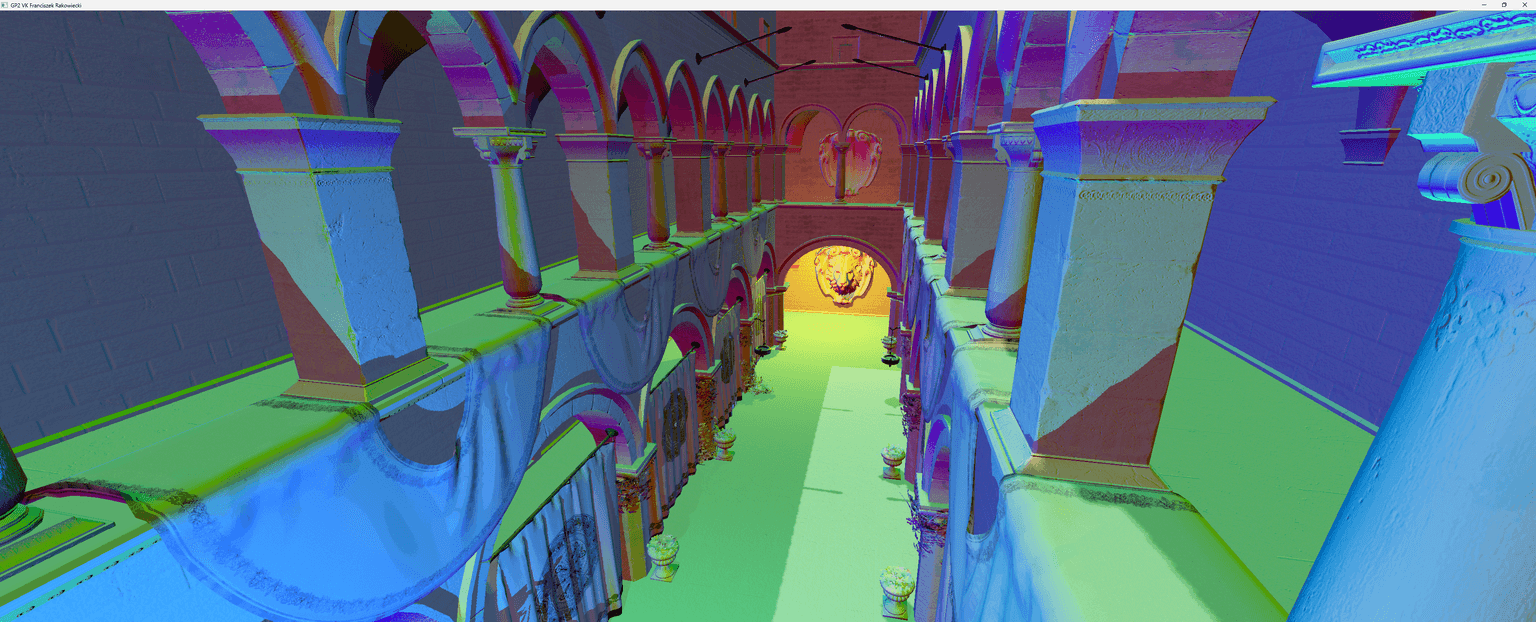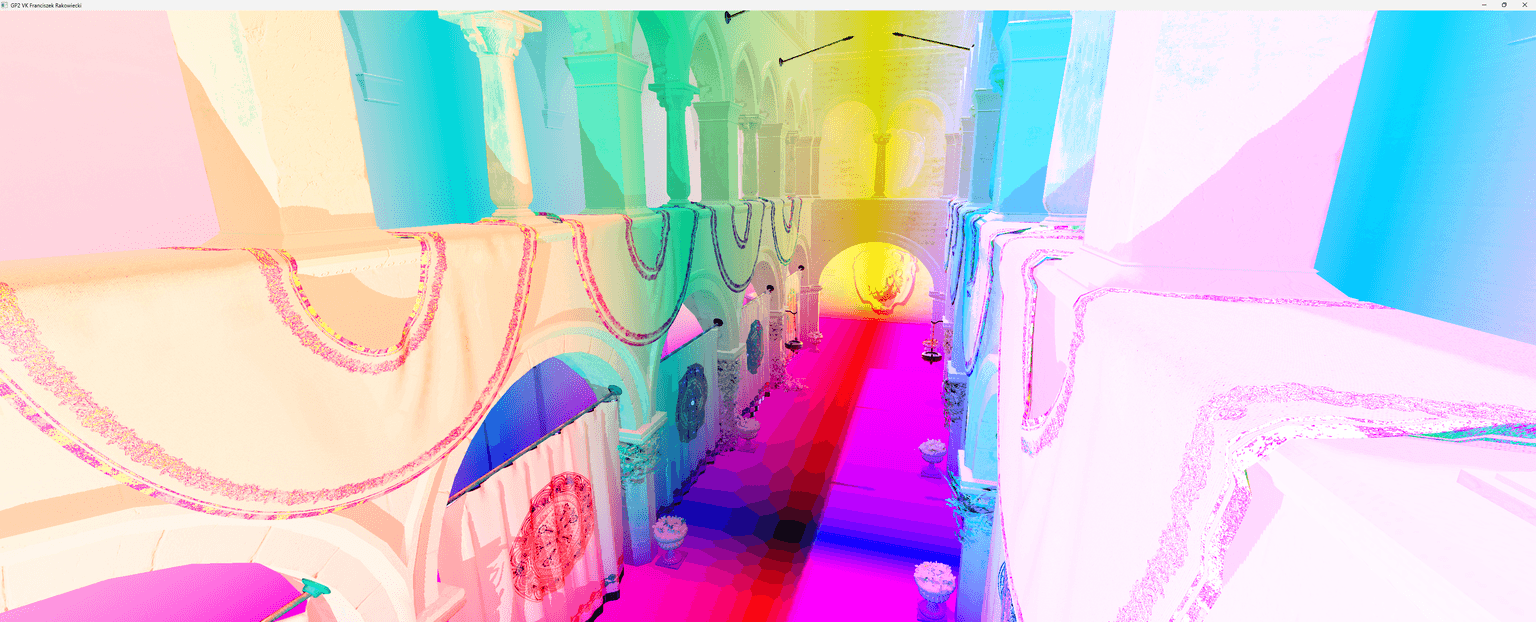
Vulkan Renderer
This renderer was made for my Graphics Programming 2 course at DAE and was my first proper dive into Vulkan. The goal was to focus on a modern rasterization pipeline using the Sponza scene rather than trying to build another full game engine. Working this close to the rendering pipeline gave me a much better understanding of what normally happens behind the scenes when something appears on screen.
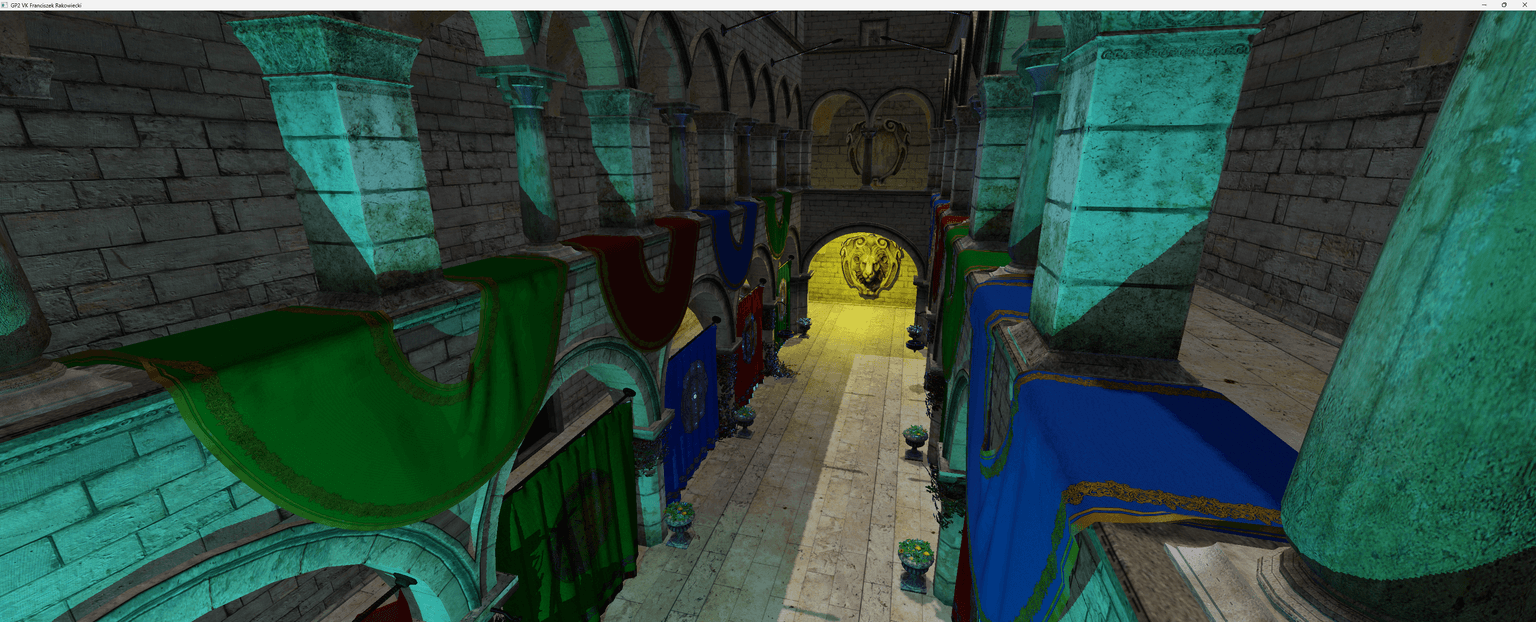
The renderer uses physically based rendering with a Cook-Torrance BRDF, GGX distribution, Fresnel and metallic/roughness materials. It uses deferred shading and lighting, supports directional lighting and up to eight point lights, and includes HDR tone mapping using an ACES-style curve. Directional shadows use Poisson-filtered sampling. Point-light shadows are generated using depth cubemaps, with the scene rendered six times for each light during the first frame.
Technology:
- Vulkan and Vulkan Memory Allocator for buffer allocation
- GLFW for window creation and input
- GLM for mathematics
- TinyGLTF for glTF loading
- TinyEXR for the HDR skybox
- stb_image for texture loading
- GLSL shaders compiled to SPIR-V during the CMake build
This project was my first real hands-on experience with Vulkan and made me appreciate how much work normally happens behind the scenes in higher-level graphics APIs. Vulkan was challenging, but I really enjoyed having much more direct control over the rendering pipeline and understanding what the API is actually doing. I would like to come back to Vulkan in my own projects. One idea is to eventually add Vulkan support to Froggy Engine, or possibly build another engine around it and use what I have learned here to take things further.
Gallery
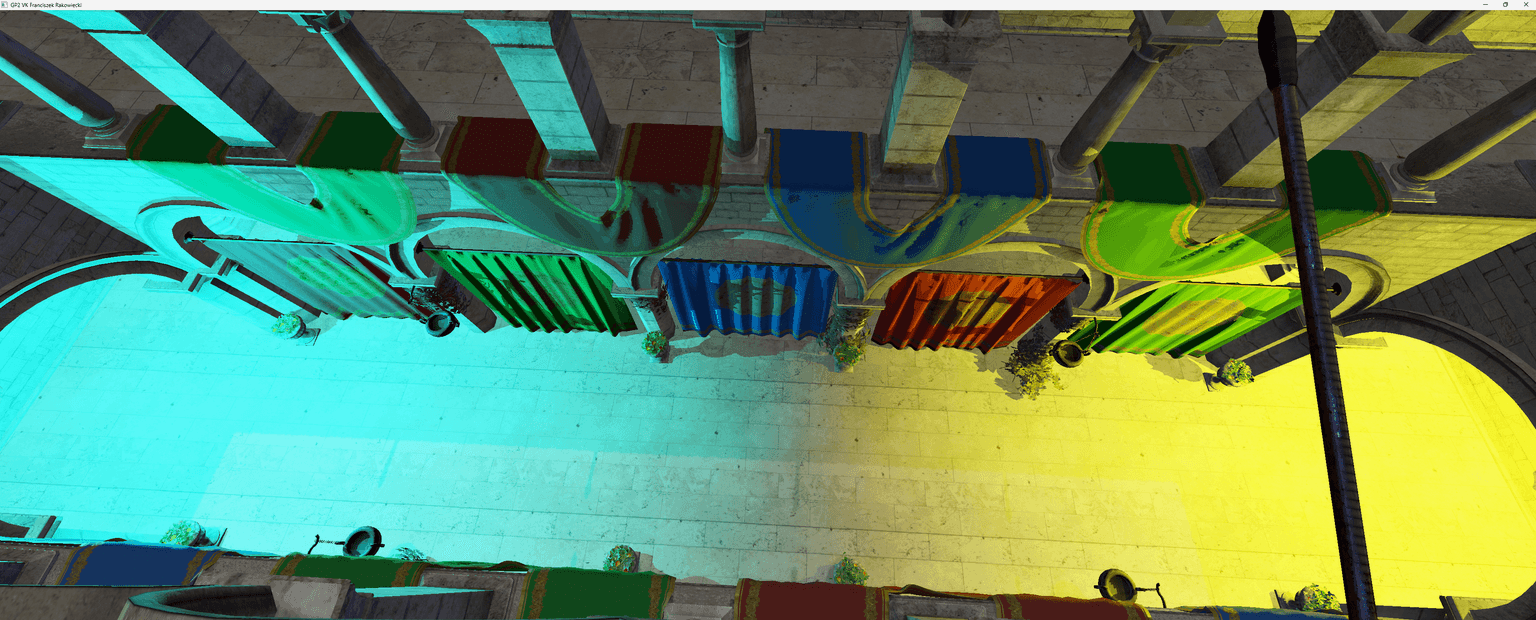
Top down 2 point lights
4 point lights
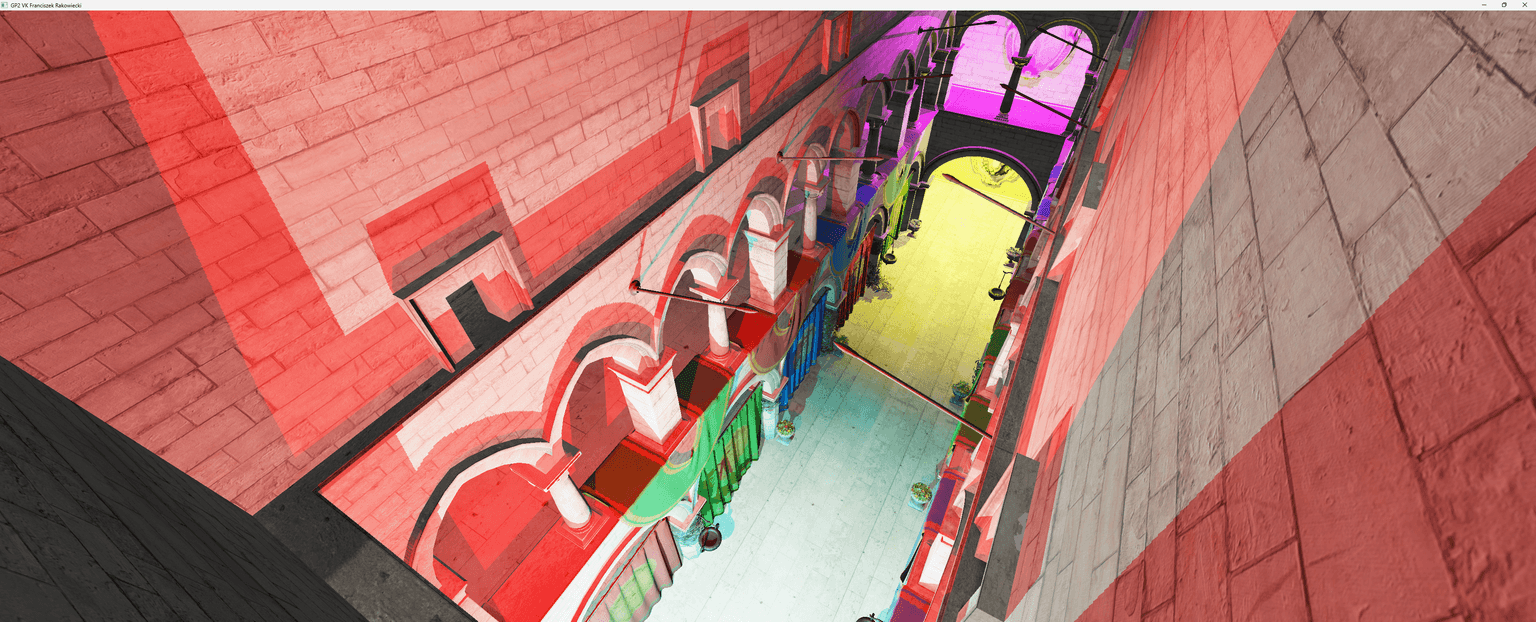
Color
Normal